



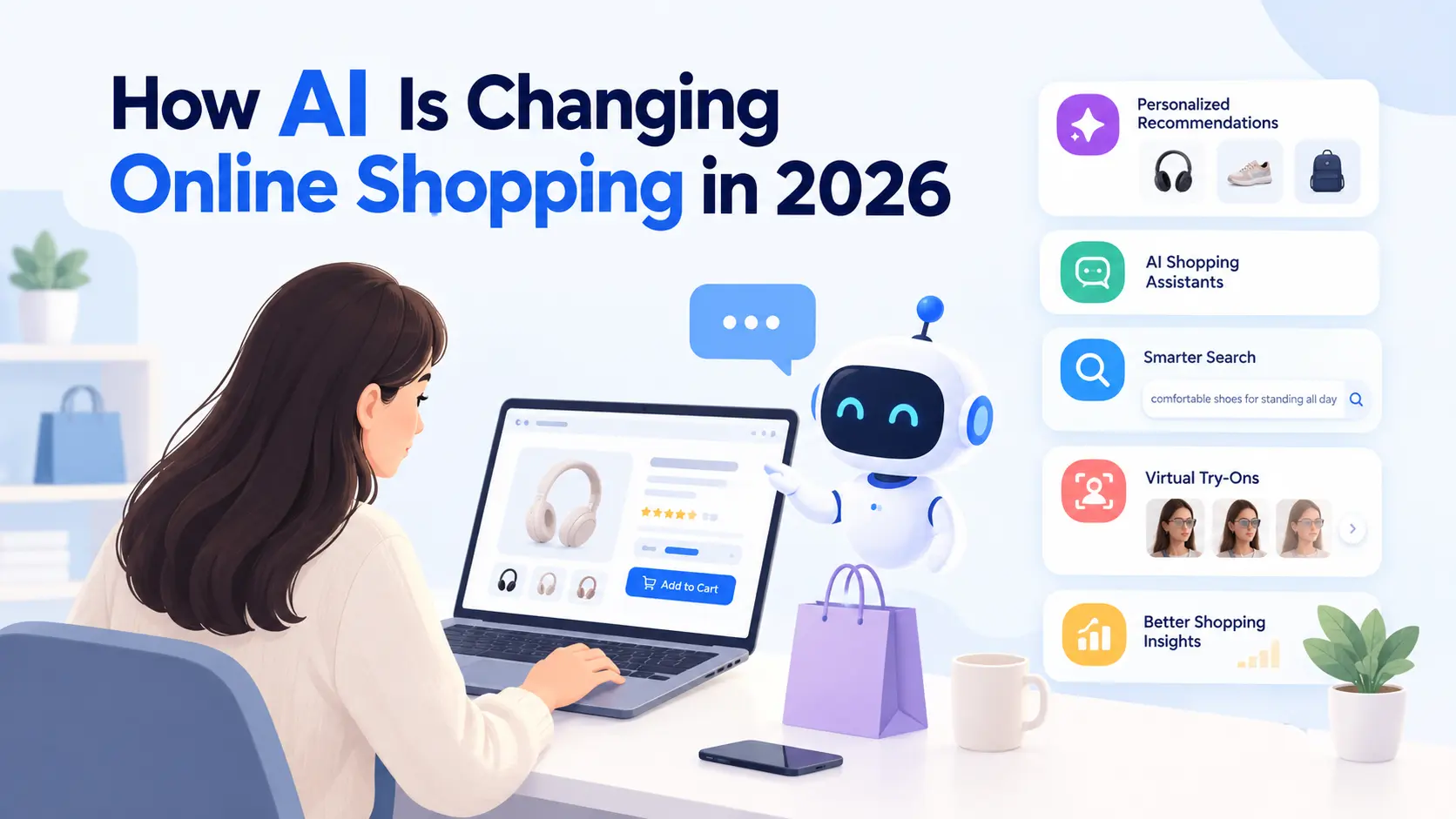
Online shopping has become faster and more personalized than ever. In 2026, one of the biggest technologies changing the way people shop is artificial intelligence (AI). From personalized product recommendations to smarter search and virtual shopping assistants, AI is helping shoppers find products with less effort.
For online retailers, AI is also creating new ways to understand customers, improve their stores, and deliver better shopping experiences.
Smarter Product Recommendations
One of the most noticeable uses of AI in ecommerce is personalized recommendations. Online stores can analyze browsing behavior, previous purchases, searches, and product preferences to suggest items that may interest individual shoppers.
Instead of showing the same products to everyone, AI can create a more personalized shopping experience. For example, someone searching for running shoes may receive recommendations for sports socks, fitness accessories, or other products related to their interests.
This can make product discovery faster while helping shoppers find items they might otherwise overlook.
AI-Powered Shopping Assistants
AI shopping assistants are becoming another important part of ecommerce. Instead of manually searching through hundreds of products, shoppers can describe what they need in natural language.
For example, a customer could ask:
“I need a lightweight backpack for weekend travel with a laptop compartment.”
An AI-powered shopping assistant can potentially help narrow down suitable options based on the shopper’s requirements.
This approach makes online shopping feel more conversational and can be especially useful when customers are unsure which product to choose.
Better Search Results
Traditional ecommerce search often depends on exact keywords. AI is changing this by helping online stores understand the meaning behind a shopper’s query.
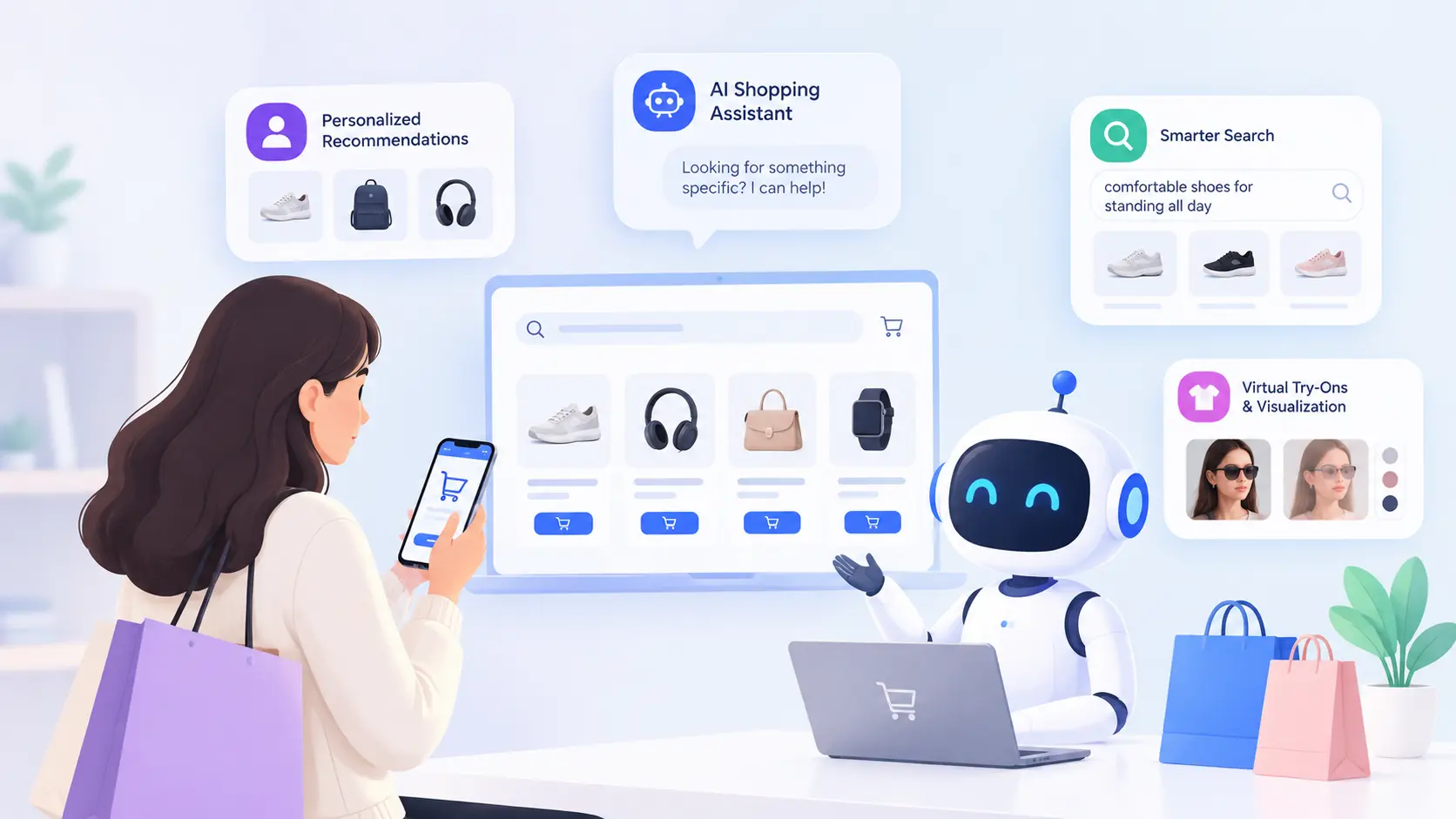
If someone searches for “comfortable shoes for standing all day,” an AI-powered system can understand that the customer is looking for comfort, support, and everyday usability rather than simply matching individual words.
Better search results can reduce the time customers spend looking for products and make online stores easier to navigate.
Virtual Try-Ons and Product Visualization
AI and augmented reality are also helping shoppers visualize products before purchasing them. Depending on the retailer and product category, customers may be able to see how clothing, accessories, furniture, or other items could look before placing an order.
For fashion shoppers, virtual try-on features can make it easier to compare styles. In home shopping, visualization tools can help customers understand how furniture or décor might fit into their space.
These technologies could make online shopping more interactive and reduce uncertainty before a purchase.
AI Helps Retailers Understand Customers
AI isn’t only useful for shoppers. Ecommerce businesses are also using AI to analyze customer behavior and improve their operations.
Retailers can use AI to identify popular products, predict demand, analyze customer feedback, and improve marketing campaigns. AI can also help businesses automate repetitive tasks such as answering common customer questions or organizing product information.
For smaller online businesses, these capabilities can make it easier to compete with larger retailers.
What Does This Mean for Shoppers?
The growth of AI in ecommerce could make online shopping more convenient, but shoppers should still make informed decisions. Personalized recommendations are not always the same as the best value, so customers should compare prices, read reviews, check product specifications, and understand return policies before buying.
AI can help shoppers discover products, but the final purchasing decision should remain with the consumer.
The Future of AI Shopping
AI is quickly becoming an important part of ecommerce. From smarter recommendations and conversational search to virtual product experiences, artificial intelligence is changing how people discover and purchase products online.
As these technologies continue to develop, online shopping may become increasingly personalized and interactive. For shoppers, the biggest benefit could be less time searching and more confidence when choosing the right product.
For ecommerce businesses, adopting AI thoughtfully could become an important part of creating better customer experiences and staying competitive in a rapidly changing market.