



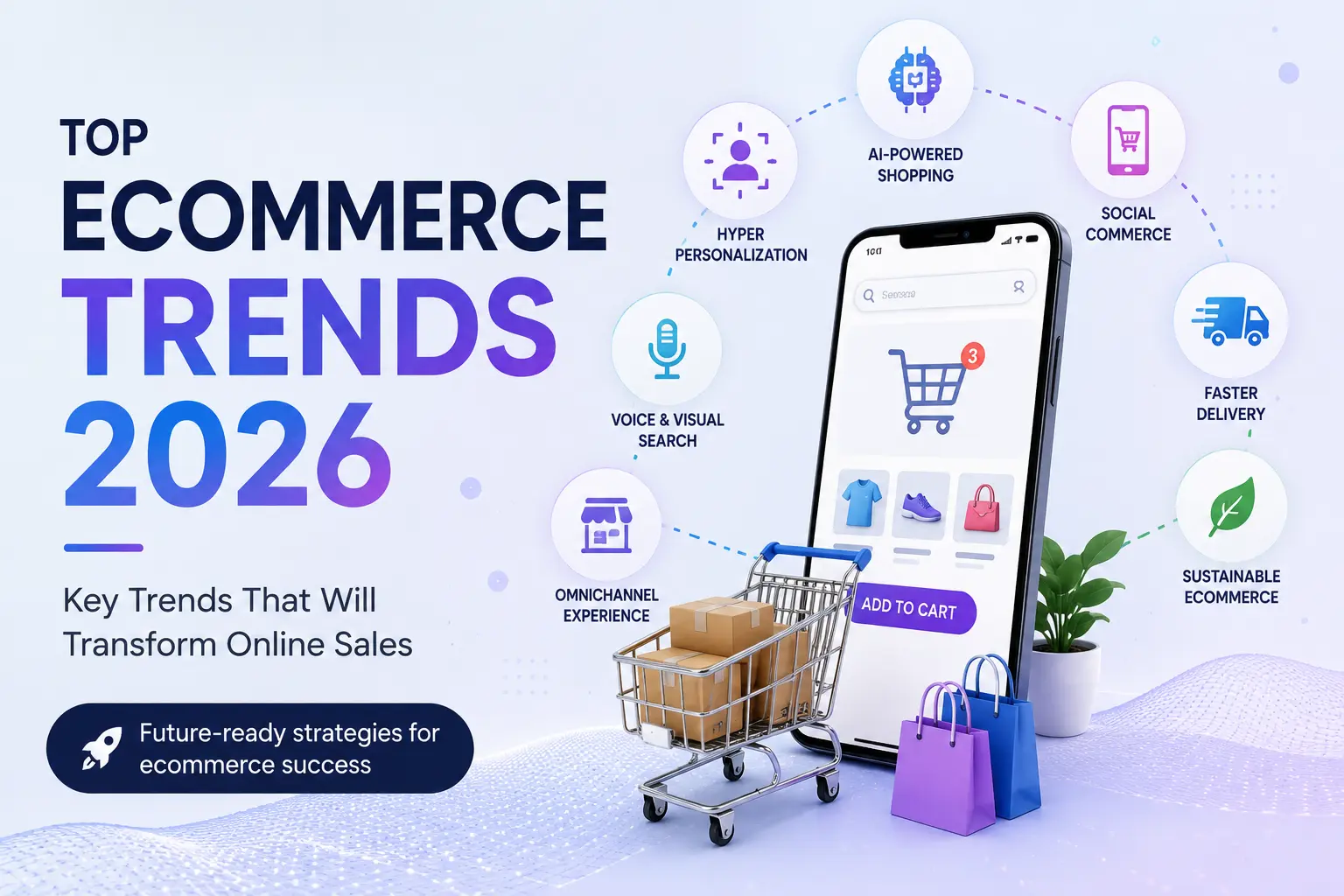
The ecommerce sector is in a constant state of change. As the technology continues to grow at an exponential level as the demands of consumers grow with each passing minute, then it is expected that online businesses are to live up to these demands if they have to be competitive. AI, customization, social ecommerce, and quicker fulfilment are the factors powering ecommerce in 2026. As either an ecommerce merchant or Amazon seller (or as a DBA), understanding these trends can help your business thrive and increase your sales.
Here are the top ecommerce trends that are expected to dominate 2026.
AI-powered Shopping Experiences
AI has been taking centre stage in today’s ecommerce landscape. In 2026, AI will help create personalized product suggestions, automate customer support, create dynamic pricing and even offer content creation abilities.
Online retail websites can keep a watch on this type of user behaviour in real-time and offer items which are strongly likely to convert. Customer inquiries will be attended to in real-time and customer satisfaction will be enhanced, and support costs will be reduced, by AI chatbots.
The businesses that start using AI tools will be at a huge advantage over its competitors.
Hyper – Personalization
Very few people are taking a chance on brand name marketing. Businesses are making more and more products to provide a more customized experience to customers.
Synthetic e-mail marketing campaigns, product bundles, your homepage recommendations and personalized discounts will be customary. If they think that the brand can understand them, they are more inclined to buy the brand.
Customer satisfaction is a key area for personalisation to be meaningful in maintaining it and for repeat sales to be realised in 2026.
Social Commerce Growth
There has never been a better time to look at social media as a great ecommerce channel than now in 2021 as Instagram, TikTok, YouTube and Facebook are becoming ground breaking sites. Brands are no longer sending searches to other sites, but are promoting their products directly on social media sites.
The video short clips, live shopping events, and livestreamed product demos by influencers will remain strong drivers in the decision making process.
For those working in the ecommerce segment, social commerce has turned into a must! It has slowly come into the role of an important sales channel.
The Ability to Input a Question Through Voice or Vision
The increasing number of consumers are looking to the online world for a discovery process through voice assistants and through images. Purchasers can upload an image or talk to the assistant to suggest a product name to search on, instead of typing it.
Product titles, image Alt tags, and keywords that are used in the natural human conversation will remain important in terms of visibility.
In fields such as fashion, home décor, beauty, consumer electronics, and more, visual search will prove to be helpful.
Faster Delivery Expectations
Fast in the ecommerce world is a competitive advantage. People currently have rather short delivery waiting periods to count on – same day or the next day.
The growing importance of companies establishing local warehouses for faster delivery, optimizing inventory levels and enhancing order fulfilment through warehouse automation will be the main priority for 2026 enterprises.
Rapid delivery helps not only to improve the customer experience, and to reduce cart abandonment rates, but it can also increase conversion rates!
Subscription – based ecommerce
Subscription commerce is an emerging trend, not only for streaming services and software. People are signing up for everything from groceries / food to beauty products to pets, coffee to vitamins to household and more.
Subscription can help to create a recurring revenue stream and create higher customer lifetime value.
For online brands that offer flexible subscription plans, they are more likely to establish a stronger connection with their customers.
Sustainable Ecommerce
Consumer behaviour to date is still strewn with the seeds of ecological awareness. Brands implementing transparent sustainability measures, carbon neutral packaging, ethical sourcing, and recyclable packaging are appealing and popular with consumers.
They are integrating sustainability into their winning pitch – and not in just their message.
Earning trust and loyalty from customers will be driven by businesses who really show they are responsible in the environment in 2026.
Omnichannel Shopping Experiences
Consumers want to have a unified experience on their websites, mobile applications, marketplaces, and in retail retail locations.
By using ‘omnichannel marketing’, customers can find products on one hand, buy them on another and further enjoy the same levels of customer service at each customer touch point.
Synchronizing inventory, creating a single profile of the customers and including marketing automation will be a must-have for expanding ecommerce.
Final Thoughts
The ecommerce landscape will be transformed in 2026 thanks to AI, personalization, social commerce and convenience. Companies that are ready to embrace these changes are going to be in a more favourable position in the market and will achieve better sales and establish sustainable brand loyalty.
Ultimately, the top ecommerce brands won’t just be about products, they will provide intelligent, personalized and frictionless shopping experiences.
With all of the competition raging, it no longer matters if it is just something that you are going to adapt to. It will definitely be the main pillar of the success of ecommerce in 2026 and coming years.